Winner of the Positive Role Model Award for Age at the 2025 National Diversity Awards
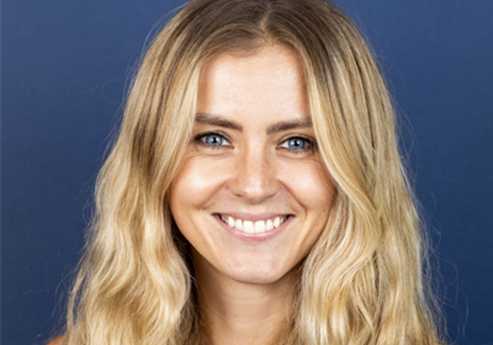
Isabelle Hawkins is an actor with over 150,000 followers on social media, using her platform to challenge stigma around addiction, neurodivergence, and mental health. After being told she was “too young” to have a problem, a belief that delayed her seeking help, Issy entered rehab for alcohol addiction at age 21. Later graduating drama school into the pandemic, she began sharing her story to show young people that recovery is possible and sobriety is the opposite of boring. Now 10 years sober and diagnosed with ADHD in 2024, she also speaks on how neurodivergence intersects with addiction. Her work has been featured by BBC Radio 1, Newsweek, and The Telegraph, and as an ambassador for Alcohol Change UK, she has contributed to national campaigns and been to Parliament.
How has your work made a difference to your community or the people you support?
I’ve received messages from people saying that my content made them realise they needed to work on their relationship with alcohol, or that they could ask for help with an addiction issue because they felt less ashamed knowing they weren’t alone and that there was help out there. I’m so humbled and overwhelmed when I receive those messages, especially when it’s young people, as not seeing others like me out there meant it took me longer to admit I had a problem. There are people that messaged me when I first started creating content in 2022 to say they were getting sober because of the content, and they’re still sober and on that journey with me today. We’re stronger when we do it together, and I’m so grateful for the community. It makes me feel less alone too.
What first inspired you to begin this journey?
I got sober at 21, and at the time, I couldn’t see anyone like me speaking openly about struggling with addiction. That made me feel incredibly alone. Years later, when I graduated drama school into the pandemic, I decided to start posting online so that other young people wouldn’t have to feel as isolated as I did at the start of my journey.
By then, I’d been sober for seven years and no longer felt as connected to the girl I once was, which helped me share my story without shame. As an actor, I’d already spoken about my experiences at drama school—using personal truth is a key part of the training—so I was comfortable being open.
There’s still so much stigma around being in recovery, which keeps many people silent. I knew that if I had the privilege of speaking out without risking too much judgement in my career, then I wanted to use that to create change. Sharing my story felt like a way to start breaking down that stigma and offer the kind of visibility I never had when I needed it most.
Tell us about your experience at this year’s National Diversity Awards ceremony.
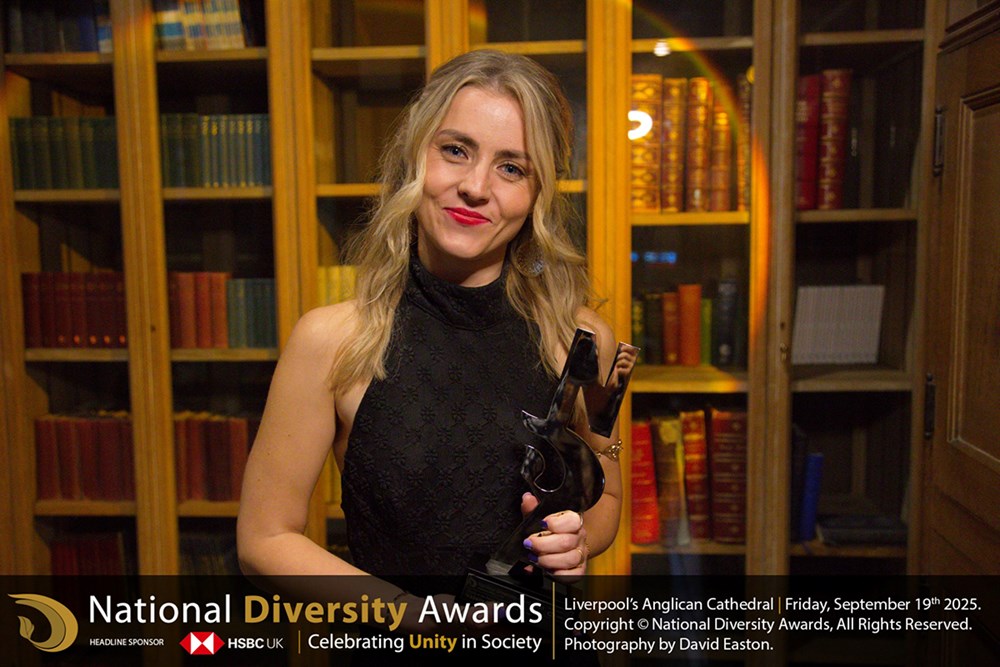
I genuinely thought there was no way I’d won, firstly because the people in my category were so incredible, and then because we were seated right at the back. I thought the walk to the stage was far too long and would slow everything down. When they said my name, I was so certain I hadn’t won I was filming the screens, to capture one of my fellow nominees walking up. My husband had to give me a gentle push to get me moving because I was in total shock. I was sat at a table with members of the Merseyside Police Force and the Windrush Foundation and had the best evening having wonderful conversations. Meeting so many amazing people at the NDAs doing beautiful things for the world has been soul food for me. And Liverpool Anglican Cathedral takes your breath away. What a venue.
How do you think winning this award will influence your work or your future goals?
The whole NDA experience, especially meeting fellow nominees at the HSBC networking event, has already had a huge effect on me. I’d been feeling slightly overwhelmed by the state of the world and didn’t realise how much I needed to see that beautiful things are happening all over the country every day, even if we don’t always hear about them.
I also had some incredibly empowering chats with the judges, who encouraged me to believe in myself and understand my power (something I really struggle with). They also encouraged me to understand that I can use my voice across many conversations, as I think I’ve got stuck in the thinking that I’m confined to campaigning on one subject matter when I in fact have passion for so many different issues across society. For example, my recent adult ADHD diagnosis is something I want to speak more about. There’s so much misunderstanding about how neurodivergence presents in young girls and women due to their exclusion from the original studies. There’s a lot of work to be done in the world, but I have real hope for a brilliant, bright future and want to make sure I’m contributing to changes in the right direction in whatever ways I can.
Which of your projects, initiatives, or campaigns are you most proud of, and why do you think they’ve had such a strong impact?
I’m really proud of a monologue I wrote and shared online about the day I hit rock bottom, and the impact it had because I’m so passionate about using art to affect change. I’ve also loved creating series like Sobermas, Give Up Vaping With Me, and sharing my ADHD diagnosis journey in real time with my followers. It’s empowered other women to seek diagnosis, and that means the world to me. I’m also proud of the minds that have been opened to the idea that addiction does not discriminate and that young people can suffer with this issue also. In 2022 I used to receive a lot of backlash and negative comments that would minimise my experience and I very rarely see that now. I’m also just really proud of where the sober movement is now. I think the success we’ve seen with alcohol free beverages and more people discussing sober curiosity and a healthy relationship with alcohol is such a great thing for young people. When I was in my twenties and tackling sobriety, I was considered strange. I don’t think that would be the case if I were going through it now as it’s been made into something that is far more accepted and dare I say it, even cool!
Looking back, is there anything you would approach differently now, or something you’ve learned along the way that changed your perspective?
I think the biggest thing I’ve learned is that you can’t give your energy to every single fight, and that ‘rest’ is part of the process. I used to feel guilty for resting and therefore very rarely did. Moving slowly also wasn’t something I was familiar with. But after experiencing fairly intense burnout, I now know my limits and try to be kinder to myself. I’ve accepted that the retreat and rest phase isn’t just important, it’s essential, as is having fun and doing things that are just for you. We need that time to grow and rejuvenate, to then re-emerge with a full tank and a new vision. I now try to focus on what I can do sustainably, trusting that even small moments of impact matter.
What advice would you give to others who want to make a positive difference in their community or workplace?
Embrace your authenticity. You have gifts and a voice to offer this world that is authentically yours and your story is where your power lies. Sharing on social media was scary at first as I thought that I would be judged. I’ve always been very good at masking but I’ve realised that when you drop that mask and show up as you (which doesn’t have to be on social media by the way), then that is where the magic happens. I know it’s scary but it’s what makes you powerful, and who cares what anyone else thinks! Those that truly love you will stick around no matter that. A friend once said to me that no decision made out of fear had ever ended well for them, and that really stuck with me. Once I got over that fear of judgement, that was when I started to make an impact in the way that I wanted to.
Who has inspired or supported you most on your journey, and how have they influenced your work?
My magical mum is over 15 years sober and paved the way for me to do the same. Her recovery gave me permission to begin mine and helped me believe it was possible. Growing up as the child of someone struggling with addiction is a difficult journey, but I’m so proud of the work we’ve done together to heal the emotional wounds of the past. We now have the most beautiful relationship and a deep understanding of one another, having lived the same experience from different perspectives. Our relationship inspires me to help families that are going through or have been through similar situations. I also have to thank the online community that’s grown around my content. The people who comment, message, and share their stories make it a shared space of healing and solidarity. That energy fuels me. And I couldn’t do any of it without my husband. He is my biggest champion and support, and makes me feel like I can do anything.
What does receiving a National Diversity Award mean to you personally, and to the community or cause you represent?
Receiving this award has meant more to me than I can put into words. I’m often incredibly hard on myself and don’t always stop to acknowledge any sort of impact I may have had, so to be recognised in this way has been a beautiful reminder to pause, reflect and give myself a pat on the back (I even struggle to write that down). It’s helped me grow in confidence and given me the encouragement to keep going, even when the work feels overwhelming or emotionally taxing.
To the community I represent, I hope it feels like validation that addiction doesn’t discriminate, that it is a mental illness not a moral failing and that you don’t need to be ashamed and therefore suffer in silence. Recovery also doesn’t have one face or follow one path. It’s messy, non-linear, and deeply human. I hope this recognition helps break down stereotypes and shows that stories around alcohol harm, substance use, mental health and neurodivergence are worthy of attention and compassion.
Is there anything you’d like to see from local or national government that could better support your work or others doing similar things?
As I said in my acceptance speech, we need more funding for rehabilitation and addiction services in this country, rather than relying on an already overstretched criminal justice system to house people struggling with their mental health. Addiction is a mental illness not a moral failing and we need to start treating it as such. I’ve watched many people I was in treatment with, who had been funded to come in from prison, go on to lead lives where they are contributing to society, healing their families etc just because the state paid for their treatment and showed that they were worth someone believing in them. I’d also love to see more support for peer-led recovery initiatives, especially those reaching younger people. We also need emotional literacy and addiction awareness embedded earlier in schools – to help young people understand early on it’s not just about the addiction problem, it’s about what’s underneath it. This issue affects such a broad section of society, that speaking about it in schools would be nothing but beneficial.
What’s next for you?
Since winning the award, I’ve written, produced and acted in a short film about a couple, one of whom is in the early stages of recovery from an addiction issue, which we’ll be premiering in London in early 2026. As an actor and creative, I’m interested in how the arts can help us reach people who need support, through characters they can relate to on screen. I’m particularly interested in stories about women with addiction issues, which I feel are underrepresented, just like women in the film industry more broadly. I have more scripts in development that I can’t wait to share with the world.
Thank you for sharing your story, we can’t wait to celebrate your continued journey!